Axial Commons Image Treasury
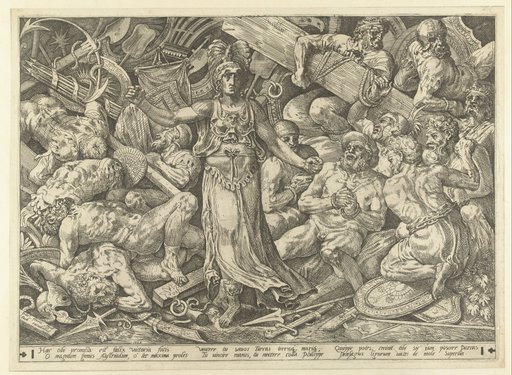
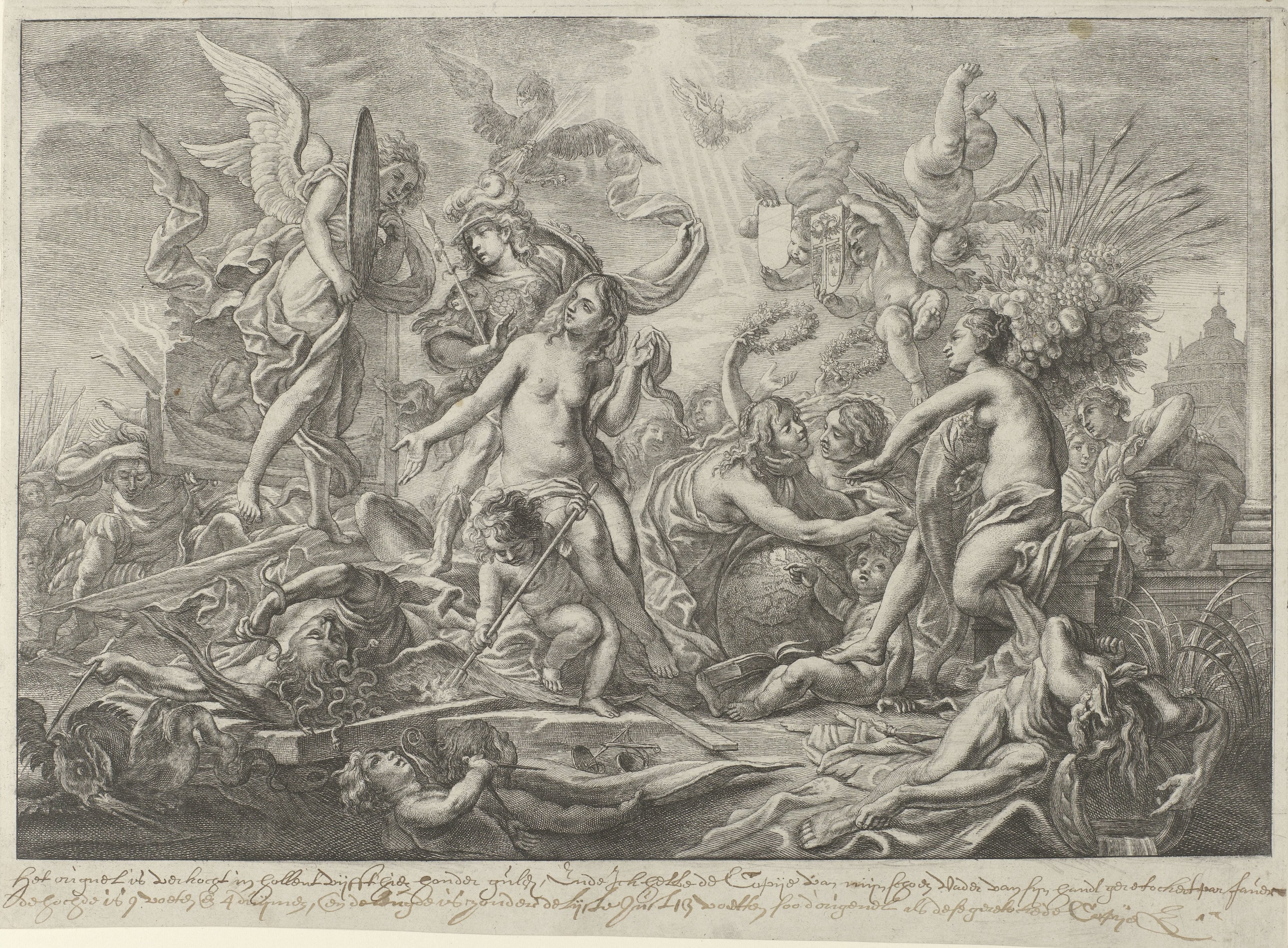
Gravura alegórica com uma mulher nua ao centro, figuras aladas, um globo e flores no alto, e armaduras e armas pisoteadas no primeiro plano.

Alegoria da paz e da abundância, gravura de 1648

Uma gravura alegórica da paz: uma figura feminina nua no centro estende-se em direção a uma mulher sentada e a um grande globo, enquanto figuras aladas, putti e um personagem com uma cornucópia de flores se reúnem no alto. No primeiro plano, armaduras e armas pisoteadas jazem sob raios de luz.

Artista
Wenceslaus Hollar
Data
1648
Técnica
Fonte
Rijksmuseum
Tamanho
4000 × 2945 px
Baixar em tamanho original
Domínio público · Rijksmuseum marks it Public Domain Mark; made by 1648.
Direitos verificados 2026-11-05 · nível A · conforme a fonte: Public Domain Mark (Rijksmuseum, image license https://creativecommons.org/publicdomain/mark/1.0/)

Crédito (bem-vindo, não obrigatório em obras de domínio público): Rijksmuseum, Amsterdam
Mais de Virtudes e alegorias

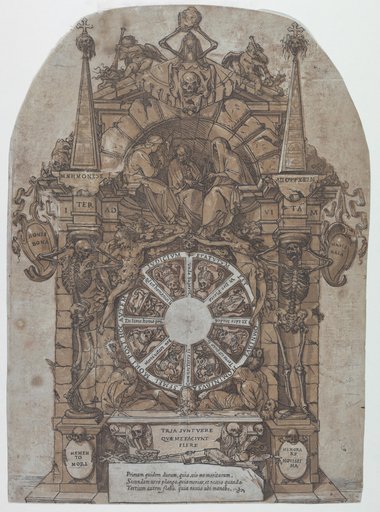
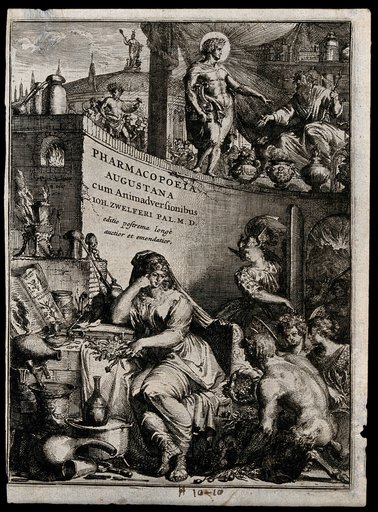
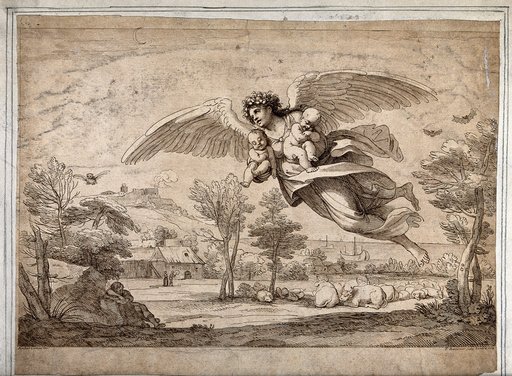
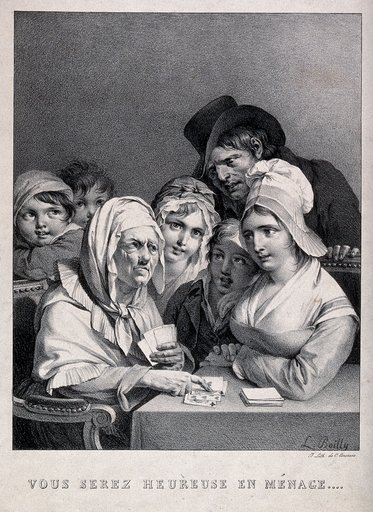
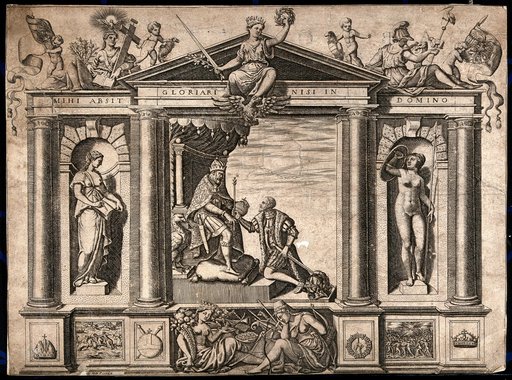
A triumphal arch decorated with Papal, Christian, Imperial and Habsburgian emblems: in the centre Philip II of Spain, surrounded by emblems of peace, justice and plenty, receives the crown from his father, Charles V; representing the good and Christian reign of Philip II. Engraving by N. Nelli.A triumphal arch decorated with Papal, Christian, Imperial and Habsburgian emblems: in theTriumph of Death with three fates in an architectural frame above a wheel of fortune flanked by skeletons; a skull and an hour glass at top and with wheel intended to spin at centerTriumph of Death with three fates in an architectural frame above a wheel of fortune flankA woman representing pharmacy receives gifts of materia medica from vegetable and mineral sources, and with the aid of a herbal distils them into medicines; above, Apollo gives authority to Hippocrates as other Olympians stand outside the temple of Aesculapius. Etching by R. de Hooghe.A woman representing pharmacy receives gifts of materia medica from vegetable and mineral A woman personifying night carries two babies over the land, representing sleep and death. Etching by F. Bartolozzi, 1764, after Annibale Carracci.A woman personifying night carries two babies over the land, representing sleep and death.De overwinning, allegorieDe overwinning, allegorieA young woman of humble origins, surrounded by children, is being told by a fortune teller that she will have a happy marriage. Lithograph by C. Constans after L. Boilly, 1824.A young woman of humble origins, surrounded by children, is being told by a fortune teller