Axial Commons Image Treasury
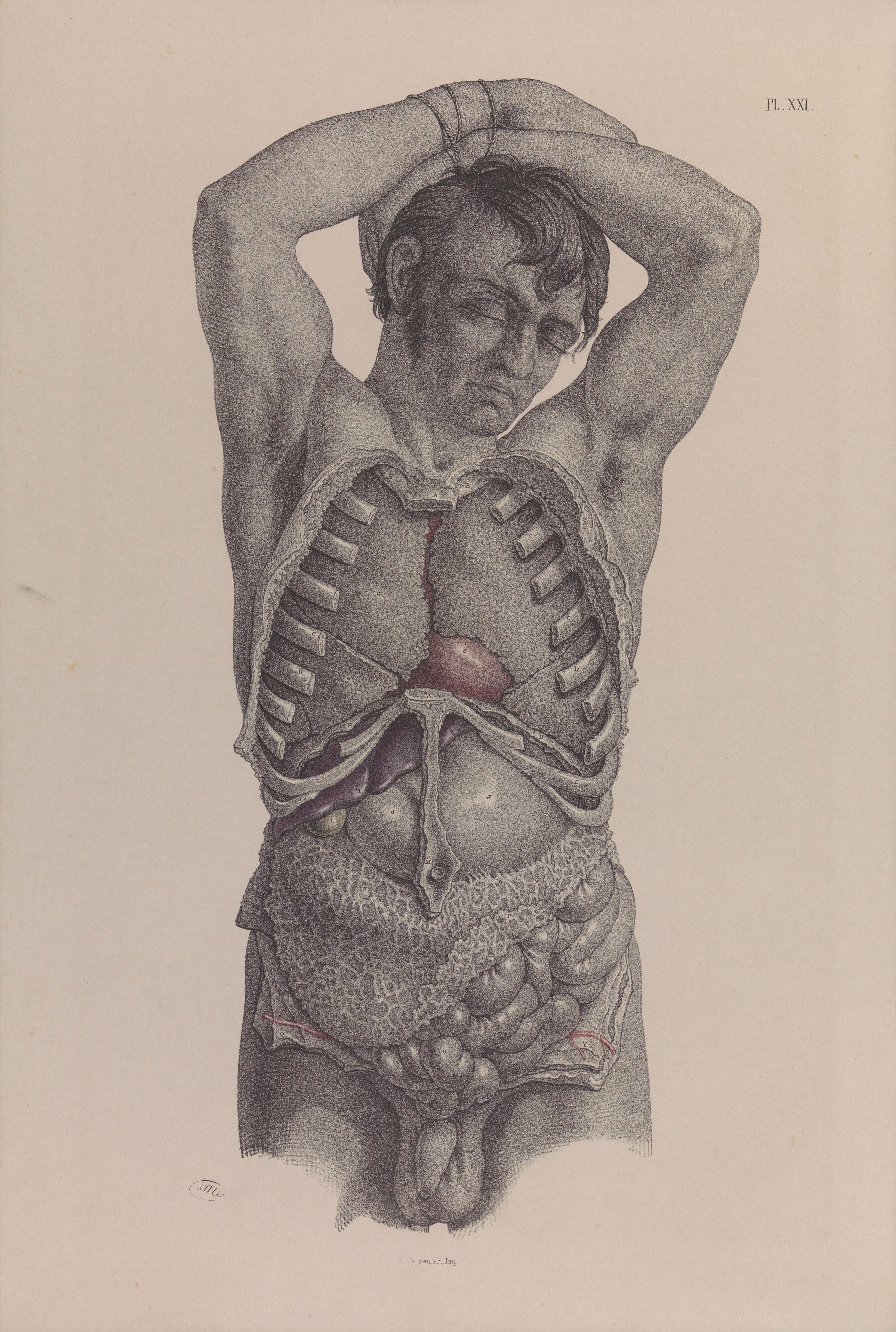
Litografia anatômica em cinza de um homem com os braços atrás da cabeça, tronco aberto mostrando costelas, pulmões, coração e intestinos.

Anatomia cirúrgica: prancha XXI, torso masculino com órgãos expostos

Uma prancha anatômica litográfica, numerada PL. XXI, mostra um torso masculino com os braços erguidos atrás da cabeça, o peito e o abdômen abertos para revelar costelas, pulmões, um coração rosado e intestinos enrolados. Tons cinzentos pontilhados modelam o corpo com suavidade sobre um fundo pálido.

Artista
Joseph Maclise
Data
1856
Técnica
Fonte
Wellcome Collection
Tamanho
2692 × 4000 px
Baixar em tamanho original
Domínio público · Wellcome Collection marks it Public Domain Mark; made by 1856.
Direitos verificados 2026-11-05 · nível A · conforme a fonte: Public Domain Mark (Wellcome Collection)

Crédito (bem-vindo, não obrigatório em obras de domínio público): Wellcome Collection
Mais de Anatomia e medicina

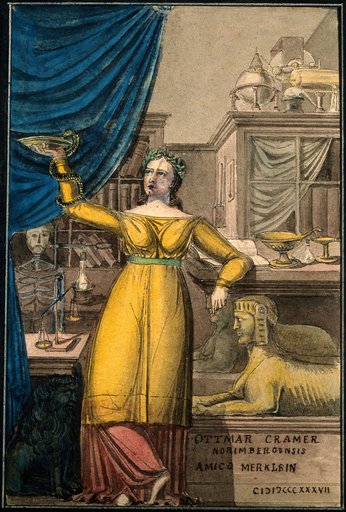
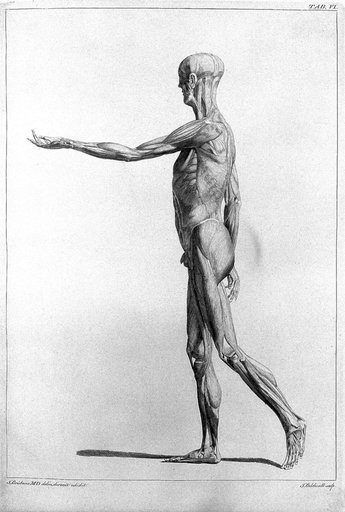
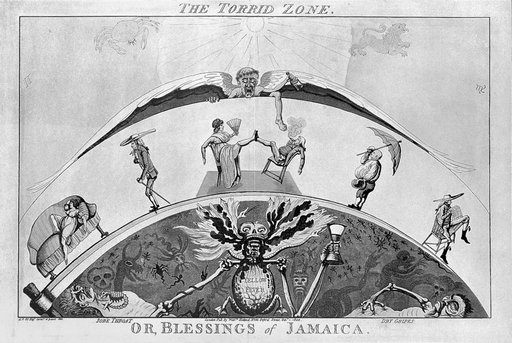
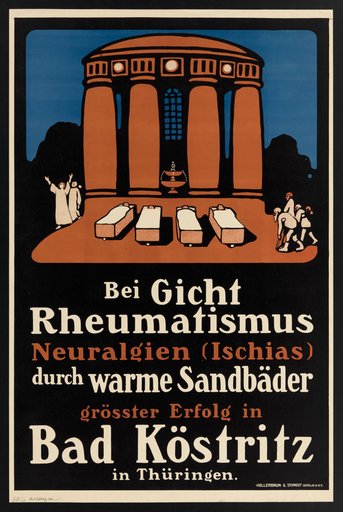
Het levensradHet levensradHygieia, goddess of health, in a scientific cabinet. Coloured pen and ink drawing by O. Cramer, 1837.Hygieia, goddess of health, in a scientific cabinet. Coloured pen and ink drawing by O. CrThe anatomy of painting; or a short and easy introduction to anatomy: being a new edition of the six tables of Albinus ... With an introduction, giving a short view of picturesque anatomy / by J. Brisbane.The anatomy of painting; or a short and easy introduction to anatomy: being a new edition A parody astrological diagram showing opposing aspects of the life of settlers in Jamaica: langorous noons and the hells of yellow fever. Coloured aquatint after A.James, 1800.A parody astrological diagram showing opposing aspects of the life of settlers in Jamaica:A temple with a fountain, representing sandbath treatment for gout and other diseases at Bad Köstritz. Colour lithograph attributed to P. Scheurich, ca. 1910.A temple with a fountain, representing sandbath treatment for gout and other diseases at BStatues of "raving" and "melancholy" madness, each reclining on one half of a broken segmental pediment, formerly crowning the gates at Bethlem [Bedlam] Hospital. Engraving by C. Warren, 1808, after C. Cibber, 1680.Statues of "raving" and "melancholy" madness, each reclining on one half of a broken segme