Axial Commons Image Treasury
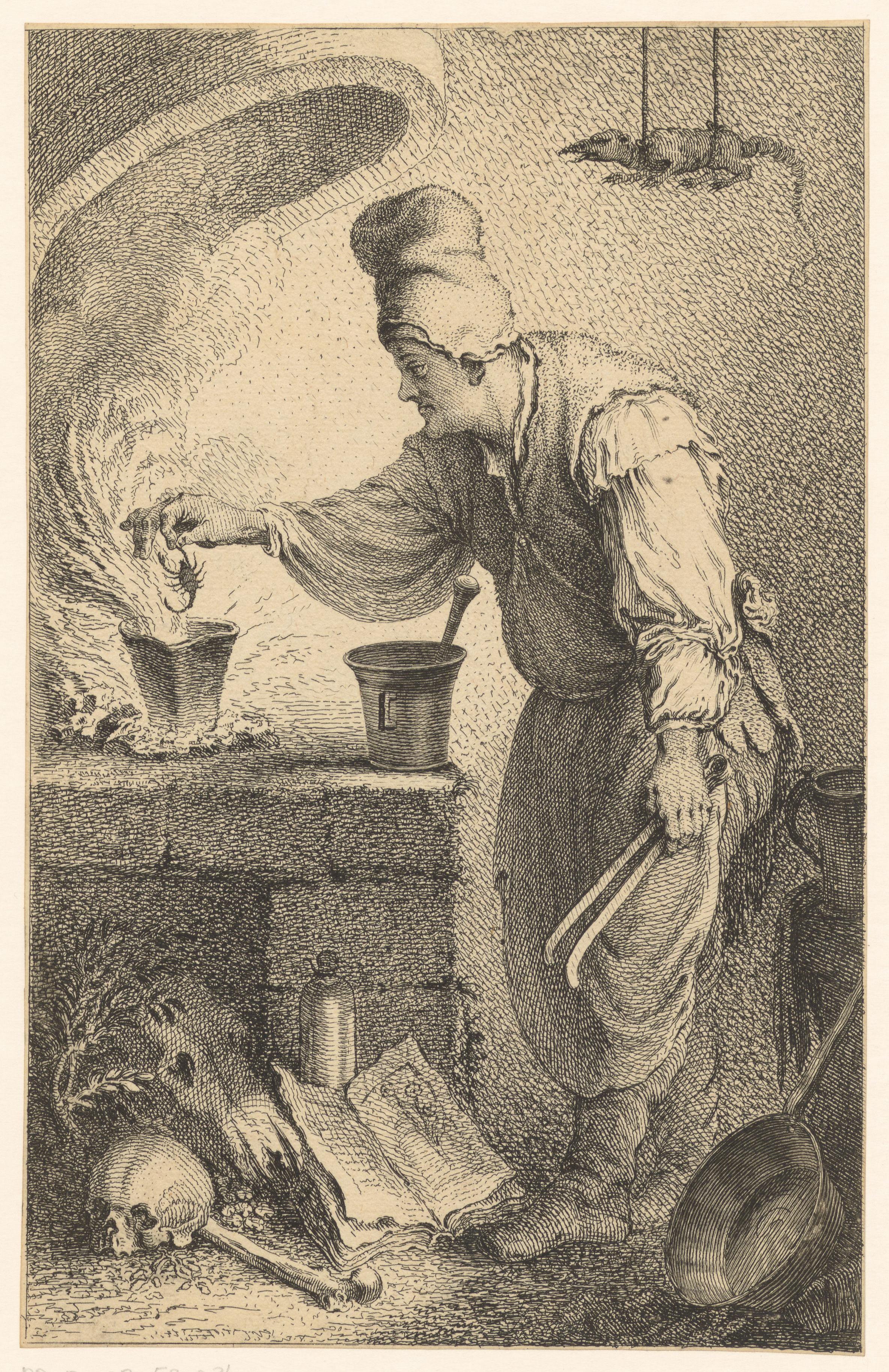
Gravura de uma mulher de touca alta curvada sobre o fogo, segurando uma criatura sobre um pote, com um crânio, um livro e um morcego.

Mulher junto ao fogão segurando um escorpião sobre um pote

Uma gravura mostra uma mulher de touca alta e mangas largas, inclinada sobre um fogão aceso, segurando uma pequena criatura acima de um pote. Sobre uma prateleira de pedra há um livro aberto, um crânio e ossos, e um morcego pende do teto.

Artista
Ferdinand Landerer
Data
1740-1795
Técnica
Fonte
Rijksmuseum
Tamanho
2368 × 3656 px
Baixar em tamanho original
Domínio público · Rijksmuseum marks it Public Domain Mark; made by 1795.
Direitos verificados 2026-11-05 · nível A · conforme a fonte: Public Domain Mark (Rijksmuseum, image license https://creativecommons.org/publicdomain/mark/1.0/)

Crédito (bem-vindo, não obrigatório em obras de domínio público): Rijksmuseum, Amsterdam
Mais de Anatomia e medicina

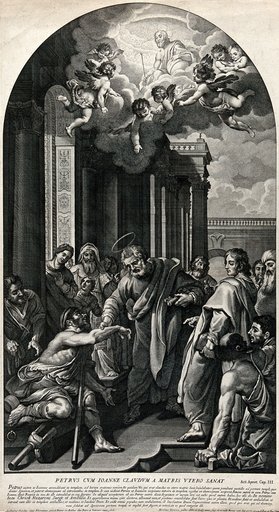
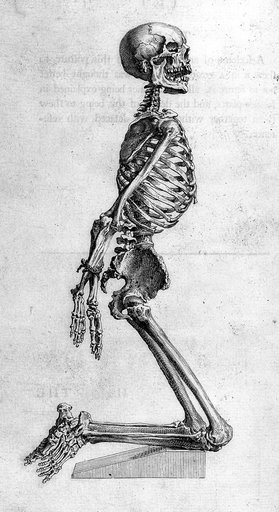
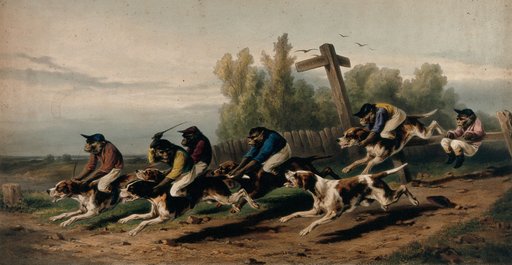
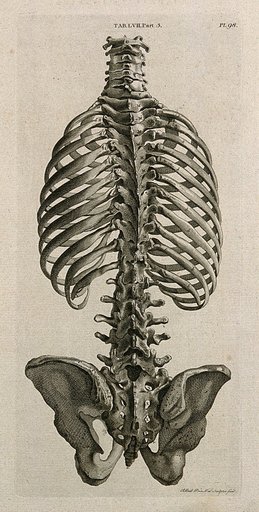
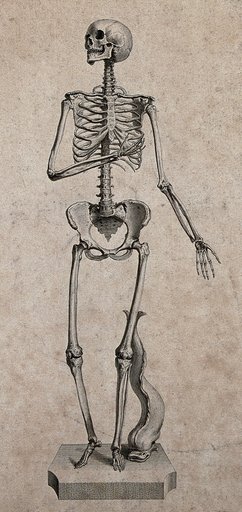
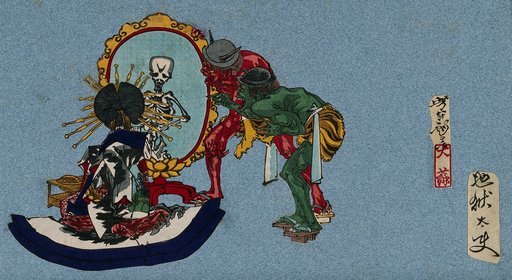
A courtesan sees herself reflected in the mirror as a skeleton: two demons look on. Colour woodcut by Yoshitoshi, 1870s.A courtesan sees herself reflected in the mirror as a skeleton: two demons look on. ColourSaint Peter and Saint John healing the lame at the temple gate, above the vision of Christ in heaven. Etching by N. Dorigny, 1691, after L. Cardi, il Cigoli, 1606.Saint Peter and Saint John healing the lame at the temple gate, above the vision of ChristThe anatomy of the human body / By W. Cheselden.The anatomy of the human body / By W. Cheselden.Monkeys dressed as jockeys riding hounds to the Charenton insane asylum. Colour lithograph by Régnier, Béttannier and Morlon after D'Orschwiller, 1860.Monkeys dressed as jockeys riding hounds to the Charenton insane asylum. Colour lithographThe trunk of the skeleton: posterior view. Line engraving by A. Bell after J.-J. Sue, 1798.The trunk of the skeleton: posterior view. Line engraving by A. Bell after J.-J. Sue, 1798A standing skeleton of a woman with a dolphin. Engraving by W. Cheselden, 1733.A standing skeleton of a woman with a dolphin. Engraving by W. Cheselden, 1733.