Axial Commons Image Treasury
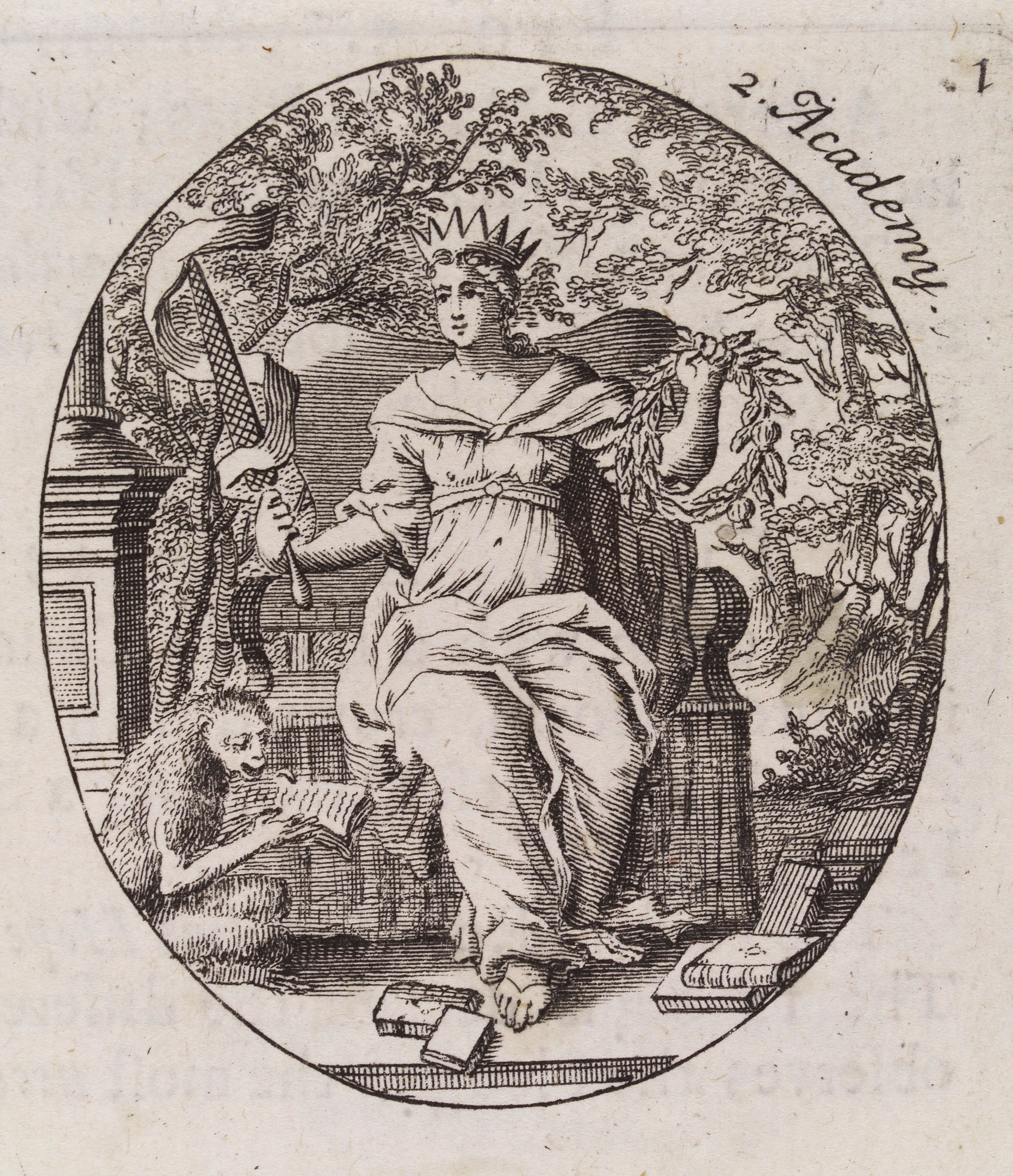
Engraved oval emblem of a crowned woman in robes holding a garland, with an ape reading a book at lower left and stacked books at lower right.

Academy emblem from Ripa's Iconologia (1709)

A black-and-white engraved oval emblem shows a crowned woman in flowing robes among trees beside a column, holding a garland in one hand and a raised flag-like banner in the other. At lower left a seated ape reads an open book; books lie at lower right, and the label '2. Academy' sits in the upper corner.

Artist
Cesare Ripa
Date
1709
Medium
Source
Wellcome Collection
Size
3446 × 4000 px
Download full size
Public domain · Licensed CC BY 4.0 (Wellcome Collection) by Wellcome Collection; credit required.
Rights checked 2026-11-05 · tier C · as stated by the source: CC BY 4.0 (Wellcome Collection)

Credit (appreciated, not required for public-domain works): Wellcome Collection. Attribution 4.0 International (CC BY 4.0)
More from Alchemy and Hidden Wisdom

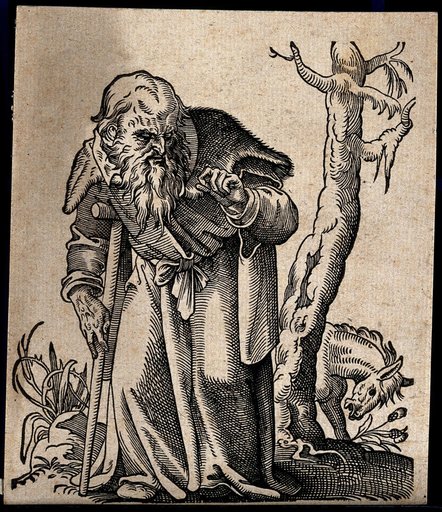
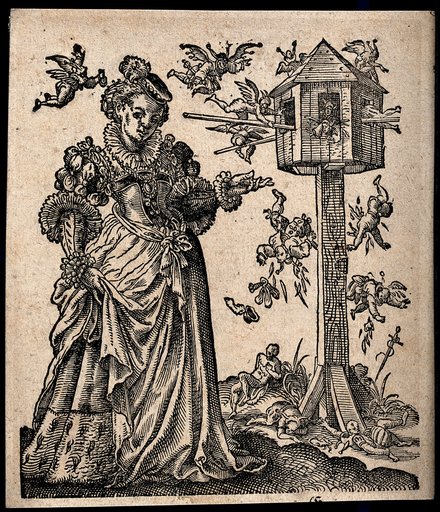
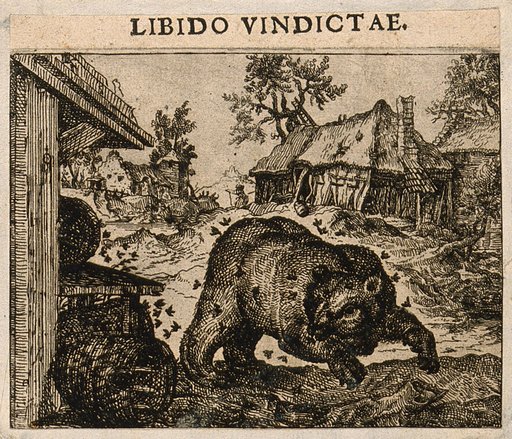
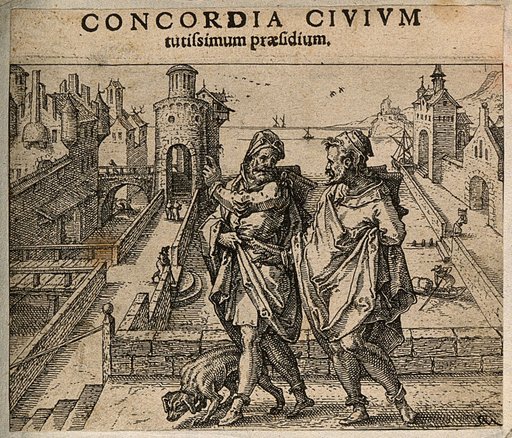
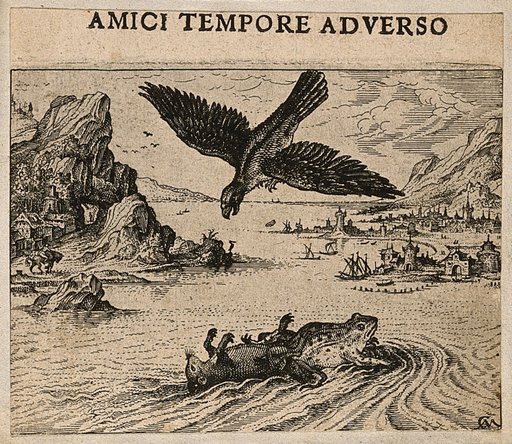
AlchemistAlchemistA bird of prey prepares to swoop on a mouse and a frog in water; illustrating Aesop's fable of the frog and the mouse. Etching by C. Murer after himself, c. 1600-1614.A bird of prey prepares to swoop on a mouse and a frog in water; illustrating Aesop's fablA hunch-backed old man supported by a crutch with a whinnying horse behind. Woodcut by Tobias Stimmer, 1580.A hunch-backed old man supported by a crutch with a whinnying horse behind. Woodcut by TobA sumptuously dressed lady gestures towards a mid-air battle between winged fools; small injured figures fall from a bird-house like edifice. Woodcut by Tobias Stimmer, 1580.A sumptuously dressed lady gestures towards a mid-air battle between winged fools; small iA bear overturns a barrel and is stung by bees; representing Aesop's fable. Etching by C. Murer after himself, c. 1600-1614.A bear overturns a barrel and is stung by bees; representing Aesop's fable. Etching by C. Two men walking above a city; representing harmony of religious or political states. Etching by C. Murer after himself, c. 1600-1614.Two men walking above a city; representing harmony of religious or political states. Etchi